I am not an animal person really. I prefer the company of people, but I do see the value of the family dog. Our dog is a trusting, ever-present equalizer. With her big, brown eyes and genial. tongue-out smile, she melts hard feelings and encourages sad hearts. She prefers to be in the middle of family gatherings and casually claims the fireplace while we watch movies on winter nights. During family arguments, she tells us when we have ceased to be considerate of each others, feelings by quietly leaving the room.
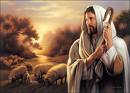
Animals have great worth in the human experience. I believe that the study of animal behavior can give us an insight on our own spiritual behavior. Tim Buehler, one of our BHHS teachers, spoke about vultures at the 2008 graduation ceremony. No, he wasn't warning our teens about their futures and the IRS. He pointed out that a vulture trapped in a wide open box will stay there until it dies, because it needs running room to fly. He used the example to show our young people that if they feel trapped they should look up.
I think many of us look for the Lord when we are in trouble. Unfortunately, we tend to forget about Him when things are good. We get trapped by stuff. There is a little monkey in India that is easily caught by a hanging gourd. The gourd has an opening big enough for the little fellow's hand. He eagerly reaches in to grab the goodies inside but once he has a fist full, he is stuck. His closed fist is too big to come back through the hole and he will not let loose the goodies. How often do we let everyday things and events get so important that we stop making room for God?
Sometimes fear traps us and we must calm ourselves enough to trust in God. Once, when I was a young teen, I was riding my Shetland pony along the county road. She stopped abruptly and would not move. I looked down and saw that she had stepped into a snarl of cast-off barb wire. She looked at me and waited. I slid off, and carefully extracted her foot from the vicious bundle, and we continued our journey. Most horse breeds, when encountering this type of trap, would freak out, becoming more and more entangled, ripping flesh from their legs. Many people think they have faith, but their fear enslaves them and they lack the total trust that comes with full faith.
I remember my Dad telling about he gila monsters that lived in the desert where he grew up. They are stout little lizards which possess great chomping strength. They are fearsome predators, but you could easily pack one home, by offering it a sturdy stick. Once it has a grip on the stick , it will not let go. Some people are not entering into a living relationship with their Lord because they will not give up control of their lives, They equate belief with weakness.
Our family had a donkey. Pedey had a free spirit which sometimes led him to escape into the neighbor's alfalfa field. This is not a safe environment for an equine. He had great patience and as often as you followed him, trying to catch him, he stayed one step out of reach. He didn't do a lot of running. He used his intellect. Some people think they don't need God if they can use their brains. Meanwhile, if they are eating heartily from a green alfalfa field, they will die.
I found out that Pedey's curiosity was his Achilles heel. If I sat down in the middle of the field, eventually he would wander closer and closer until his nose was in my lap, just trying to figure out my strange behavior. Some people's curiosity is their downfall, leading them to rash decisions and unhealthy, self-abusive lifestyles that exclude room for God. Of course, in Pedey's case, his curiosity was his salvation, bringing him back from a big belly ache.
One wouldn't think chickens were anything like people. yet, I believe it was B F Skinner who studied chicken behavior and applied it to child psychology, developing modern education techniques. We raised chickens when I was a kid. Watching those self-centered little fluff balls running around eating, sleeping and picking on each other, I certainly would hope my own children rise above that mentality. I much prefer the wisdom of the family dog we had at the time. Mario was very protective of the little chicks, and having been raised with them, had no desire to become a chicken killer. He watched over them as he did the rest to ft he myriad animals on our little farm. Kind of reminds. me of someone else.....
Thursday, July 9, 2009

Wednesday, July 8, 2009
Keeper Pile
"But Mom, where is my soul and what does it look like?" It is inevitable. If you are going to be discussing God and immortality with your child, the unanswerable question will arise. You can brush it off with the standard, "No one knows," or "It doesn't matter." Or you can have fun with it and ponder, with the help of your child's superior imagination, a soul that is so invisible to us and yet so beautiful and precious to our Creator.
The thing is, the way God sees souls is a lot different from the way we see people. If God were to sort souls out as a child sorts marbles or pebbles, none would go in the ugly pile He loves us all with agape that is absolutely unconditional. He also understands our inability to see each other this way and sent us a clear Gospel instruction on how to fix this blindness.
When Jesus brought up the story of the Good Samaritan, he really had the Jewish men around him buzzing. Not only was he challenging their lack of charity, but he was pointing out that sometimes we can learn from others whom we would ordinarily look down upon. The Samaritan, "scum" that he was, was the only man who followed his sense of natural law--that instinct for right and wrong-- and acted in a truly loving way to the beaten traveler.
Lessons in charity can come from any direction if we are open. Basically, we must look through the black or white, fat or skinny, addicted or clean, legal or alien, stable or struggling, mobile home park or ocean front condo dwelling, irritating lack of social skills or pompous self-righteousness and see every soul as bought at the same terrific price--the last drop of His Son's blood. Imagine, if you will, a parade of people that you have come across in your life, people you have judged on outward impression.
The overweight woman in front of you in the grocery line--did you superciliously not the junk food in her cart and congratulate yourself on your purchase of spinach and hummus? Did you forget that her soul is the same weight as yours? What about the Hispanic family enjoying a Sunday afternoon on the river next to your group. Did you grumble about their lack of ability to communicate in you language and wonder if they had green cards? Or did you ask yourself how you could be Jesus to them today? And your next door neighbor whom you seem to have nothing in common with, are you avoiding thinking about them, or praying for them?
God challenges us every day to see Jesus in our neighbor. The crafty Hebrew scholar, asking, "well who exactly is my neighbor," trying to find a loophole for indifference. Everyone is a neighbor. We learn much from Mother Teresa, that tiny little nun who had the guts to go full bore for Jesus. She dragged worm infested untouchable out of the gutter to take home and love until they died. She also turned a concerned eye to Americans and lectured us on our poverty of ignorance. Everyone ws equally important to her, because she knew all souls are all meant fo the keeper pile.
The thing is, the way God sees souls is a lot different from the way we see people. If God were to sort souls out as a child sorts marbles or pebbles, none would go in the ugly pile He loves us all with agape that is absolutely unconditional. He also understands our inability to see each other this way and sent us a clear Gospel instruction on how to fix this blindness.
When Jesus brought up the story of the Good Samaritan, he really had the Jewish men around him buzzing. Not only was he challenging their lack of charity, but he was pointing out that sometimes we can learn from others whom we would ordinarily look down upon. The Samaritan, "scum" that he was, was the only man who followed his sense of natural law--that instinct for right and wrong-- and acted in a truly loving way to the beaten traveler.
Lessons in charity can come from any direction if we are open. Basically, we must look through the black or white, fat or skinny, addicted or clean, legal or alien, stable or struggling, mobile home park or ocean front condo dwelling, irritating lack of social skills or pompous self-righteousness and see every soul as bought at the same terrific price--the last drop of His Son's blood. Imagine, if you will, a parade of people that you have come across in your life, people you have judged on outward impression.
The overweight woman in front of you in the grocery line--did you superciliously not the junk food in her cart and congratulate yourself on your purchase of spinach and hummus? Did you forget that her soul is the same weight as yours? What about the Hispanic family enjoying a Sunday afternoon on the river next to your group. Did you grumble about their lack of ability to communicate in you language and wonder if they had green cards? Or did you ask yourself how you could be Jesus to them today? And your next door neighbor whom you seem to have nothing in common with, are you avoiding thinking about them, or praying for them?
God challenges us every day to see Jesus in our neighbor. The crafty Hebrew scholar, asking, "well who exactly is my neighbor," trying to find a loophole for indifference. Everyone is a neighbor. We learn much from Mother Teresa, that tiny little nun who had the guts to go full bore for Jesus. She dragged worm infested untouchable out of the gutter to take home and love until they died. She also turned a concerned eye to Americans and lectured us on our poverty of ignorance. Everyone ws equally important to her, because she knew all souls are all meant fo the keeper pile.
Tuesday, July 7, 2009
Kindness
"Fill me at daybreak with your kindness, O Lord, that I might shout with joy and gladness all the days of my life."
Somewhere in the late eighties or early nineties, rude became fashionable. Little bunnies saying "bite me" or "you're stupid, I'm not" popped up on teenagers' t-shirts. The acid tongue became the normal communication among professional, upward movers as well as family members. Perhaps sarcasm has always been the fare of comedy, but courtesy in daily life has gone out the window. This is not a good thing.
Some of this is sanctioned by an attitude of putting oneself, one's needs and desires first, lest one come out with less than the biggest piece of the pie. It used to be a given that the last piece of pie would stay forever, because no one wanted to be the pig. Now the hero is the one who reaches in a grabs the last piece for himself. The liberated person is the one who speaks his mind, regardless of the feelings of those around him.
Kindness-- it seems a simple offering, but sometimes it is the hardest thing to offer. I really want to walk in kindness. I would love to never have an angry word for another human being. I want to drive down the street, see the poor driving maneuver of another motorist, and think, "That poor person must be having a bad day," or even whisper a blessing upon them. I desire with all my heart to never raise my voice against my children. I want to give everyone the benefit of doubt, no matter how they present themselves. I do not want to ever gossip at the expense of another. These things are not easy. And too often I lapse to the default mode of "how dare you confront me!" or "isn't it delightful that this or that person has made a complete fool of herself, mostly because it makes me look so good."
We have a fairly high degree of proactive kindness in our world today. Everyone really wants to reach out and help others in hardship. Unfortunately, we have a low degree of reactive kindness. People tend to bristle like harassed hedgehogs when crossed. This is where the challenge lies.
I would like to be a part of breaking this attitude of rudeness. I think it means I must hand over my needs in favor of others. A lot of times, what we tacitly think of as a "need" is not a necessity at all. I don't need to have the last word in an argument. I don't need to vent on unknown motorists. I don't need to yell at the kids. I don't need the last piece of pie, or even the first if there is someone else out there who needs it more. I don't need to participate in trash talk about some other poor soul.
Kindness doesn't mean lying down as a doormat for every user out there. It means seeing people always as God sees them. It means listening, responding, putting others first. If the added benefit is joy and gladness which is inner peace, who loses?
Somewhere in the late eighties or early nineties, rude became fashionable. Little bunnies saying "bite me" or "you're stupid, I'm not" popped up on teenagers' t-shirts. The acid tongue became the normal communication among professional, upward movers as well as family members. Perhaps sarcasm has always been the fare of comedy, but courtesy in daily life has gone out the window. This is not a good thing.
Some of this is sanctioned by an attitude of putting oneself, one's needs and desires first, lest one come out with less than the biggest piece of the pie. It used to be a given that the last piece of pie would stay forever, because no one wanted to be the pig. Now the hero is the one who reaches in a grabs the last piece for himself. The liberated person is the one who speaks his mind, regardless of the feelings of those around him.
Kindness-- it seems a simple offering, but sometimes it is the hardest thing to offer. I really want to walk in kindness. I would love to never have an angry word for another human being. I want to drive down the street, see the poor driving maneuver of another motorist, and think, "That poor person must be having a bad day," or even whisper a blessing upon them. I desire with all my heart to never raise my voice against my children. I want to give everyone the benefit of doubt, no matter how they present themselves. I do not want to ever gossip at the expense of another. These things are not easy. And too often I lapse to the default mode of "how dare you confront me!" or "isn't it delightful that this or that person has made a complete fool of herself, mostly because it makes me look so good."
We have a fairly high degree of proactive kindness in our world today. Everyone really wants to reach out and help others in hardship. Unfortunately, we have a low degree of reactive kindness. People tend to bristle like harassed hedgehogs when crossed. This is where the challenge lies.
I would like to be a part of breaking this attitude of rudeness. I think it means I must hand over my needs in favor of others. A lot of times, what we tacitly think of as a "need" is not a necessity at all. I don't need to have the last word in an argument. I don't need to vent on unknown motorists. I don't need to yell at the kids. I don't need the last piece of pie, or even the first if there is someone else out there who needs it more. I don't need to participate in trash talk about some other poor soul.
Kindness doesn't mean lying down as a doormat for every user out there. It means seeing people always as God sees them. It means listening, responding, putting others first. If the added benefit is joy and gladness which is inner peace, who loses?
Subscribe to:
Comments (Atom)