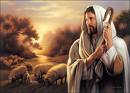
Chance or the Dance?
Faith and reason are like two wings on which the human spirit rises to the contemplation of truth; and God has placed in the human heart a desire to know the truth—in a word, to know himself—so that, by knowing and loving God, men and women may also come to the fullness of truth about themselves JPII Fides et Ratio
Recently our youth group prayed that everyone know the joy of experiencing God. This was on the heart of a couple of teens, as we pondered the things we wanted to talk to God about. And it really is that simple. There are people who do not have this joy. My son once had a dream about Hell. It was not a place of fire and agonized spirits. It was a void. It was the stark absence of God. This is what the atheist has before him. A terrible Nothing.
The knowledge of God gives the Christian a deep peace, a river of life that flows deep beneath his every thought. A Christian with a negative outlook is one who has not fully discovered his Faith, or is avoiding fully living his Faith.
A recurring theme I see when atheists are refuting theist arguments for the existence of God is “But who made God?” This is their “aha, gotcha” moment. But that is exactly the point. No one made God. He is the unmoved Mover, the uncaused Cause. He is the Lord of the Dance
If one microscopic detail were left out of the primordial mixing pot, we would not exist. A Christian scientist observes this and praises God. An atheist observes this and tries harder to find an answer. The atheist must end up believing that life is the product of chance. This is a conclusion that appears to amount to—faith. At which point the believer makes more sense.
An atheist cannot get over the idea that God transcends reason. Reason tells us that there is a God, and that he is the omnipotent creator. Faith tells us that he has spoken to us through scripture and He is a personal loving Being who loved us into existence. A Christian does not have to divorce reason to accept Faith. Reason takes the Christian to the brink Faith from where he flies on wings of Joy.
The Atheist chooses Chance. The Christian is drawn to the Dance.
Thursday, October 27, 2011

Saturday, May 14, 2011
Nada te turbe,
nada te espante;
todo se pasa,
Dios no se muda.
La pacientia todo lo alcanza.
Quien a Dios tiene nada la falta:
solo Dios basta.
Let nothing disturb you,
Let nothing frighten you,
All things are passing away:
God never changes.
Patience obtains all things.
Whoever has God lacks nothing;
God alone suffices.
nada te espante;
todo se pasa,
Dios no se muda.
La pacientia todo lo alcanza.
Quien a Dios tiene nada la falta:
solo Dios basta.
Let nothing disturb you,
Let nothing frighten you,
All things are passing away:
God never changes.
Patience obtains all things.
Whoever has God lacks nothing;
God alone suffices.
Saturday, February 19, 2011
No Fear
No Fear. Not too long ago almost every young person had a tee-shirt from this company in their closet. The brand was developed as a line of clothing appealing to athletes involved in action sports, such as surfing, snowboarding, and motor-cross. "No fear" was the motto for anyone addicted to the adrenaline rush of big waves, steep slopes and fast engines. The implication is that fear is for wimps. While not everyone is called to jeopardize their bodily well- being by hanging off cliffs, jumping from buildings or paddling into the seas, there is another place in life where this motto is for everyone.
A Christian's motto should always be, No Fear. No Fear was the motto of the Virgin Mary when she told the angel Gabriel, in response to his stupendous announcement about her Divine pregnancy, "Be it done unto me according to your word." No Fear was the motto of the apostles when they emerged from the cenacle, filled with the Holy Spirit and ready to spread the Good News to an unwelcoming world. No Fear was the motto of the missionaries who took the message of Christ to every corner of the earth and into all manner of danger, including persecution and death. No Fear was the motto of people like Francis of Assisi who stripped his garments before his father and walked away from his life of luxury to rebuild Christ's church in medieval Italy. No Fear was the motto of Fr. Damien who in the late 1800s volunteered to be the chaplain for a leper colony on Molokai Island, accepting his ultimate fate as a fair trade for doing the mercy work of Christ. No Fear is the motto of every teen who elects to stand out from the crowd, upholding unfashionable attitudes about faith and morality. No Fear is the motto of the retired person who uses his or her last bit of life energy, serving others in spite of physical failing. All these people have something in common; they know that there is nothing to fear when they are doing the will of God.
There is a more popular motto these days. That is, “Fear This and That and the Other Thing.” There has been a lot of talk in our local news about possible tsunamis and earthquakes. Even scarier perhaps is the economic storm clouds that some people see on the horizon. It seems that every decade or so we can't stand our boring existence and begin to look into the future, perceiving signs of impending societal or seismic doom. Fear directs our thoughts and we crawl into little caves of worry, marking tallies on the wall for each day we escape disaster. People are prone to this kind of anxiety. We completely forget that we are people of Anno Domini, the Year of the Lord. (Folks, this is what AD means, a dating system that has recently and unfortunately been changed, in the public world to CE, for Common Era, but that is a whole other subject.)
This kind of fear is a lack of trust which is really a lack of Faith in Jesus who promised to be with us always, “even to the end of the Age.” (Mt. 28:20) Christians, let us mark our days with tallies for the blessings we have received and the blessings we have given in the name of Christ, and let’s not keep peering into the darkness because the Light is ever present before us.
A Christian's motto should always be, No Fear. No Fear was the motto of the Virgin Mary when she told the angel Gabriel, in response to his stupendous announcement about her Divine pregnancy, "Be it done unto me according to your word." No Fear was the motto of the apostles when they emerged from the cenacle, filled with the Holy Spirit and ready to spread the Good News to an unwelcoming world. No Fear was the motto of the missionaries who took the message of Christ to every corner of the earth and into all manner of danger, including persecution and death. No Fear was the motto of people like Francis of Assisi who stripped his garments before his father and walked away from his life of luxury to rebuild Christ's church in medieval Italy. No Fear was the motto of Fr. Damien who in the late 1800s volunteered to be the chaplain for a leper colony on Molokai Island, accepting his ultimate fate as a fair trade for doing the mercy work of Christ. No Fear is the motto of every teen who elects to stand out from the crowd, upholding unfashionable attitudes about faith and morality. No Fear is the motto of the retired person who uses his or her last bit of life energy, serving others in spite of physical failing. All these people have something in common; they know that there is nothing to fear when they are doing the will of God.
There is a more popular motto these days. That is, “Fear This and That and the Other Thing.” There has been a lot of talk in our local news about possible tsunamis and earthquakes. Even scarier perhaps is the economic storm clouds that some people see on the horizon. It seems that every decade or so we can't stand our boring existence and begin to look into the future, perceiving signs of impending societal or seismic doom. Fear directs our thoughts and we crawl into little caves of worry, marking tallies on the wall for each day we escape disaster. People are prone to this kind of anxiety. We completely forget that we are people of Anno Domini, the Year of the Lord. (Folks, this is what AD means, a dating system that has recently and unfortunately been changed, in the public world to CE, for Common Era, but that is a whole other subject.)
This kind of fear is a lack of trust which is really a lack of Faith in Jesus who promised to be with us always, “even to the end of the Age.” (Mt. 28:20) Christians, let us mark our days with tallies for the blessings we have received and the blessings we have given in the name of Christ, and let’s not keep peering into the darkness because the Light is ever present before us.
Thursday, December 2, 2010
My favorite song
Tú has venido a la orilla,
no has buscado ni a sabios ni a ricos;
tan sólo quieres que yo te siga.
Estribillo
Señor, me has mirado a los ojos,
sonriendo has dicho mi nombre,
en la arena he dejado mi barca,
junto a ti buscaré otro mar.
Tú sabes bien lo que tengo;
en mi barca no hay oro ni espadas,
Tan sólo redes y mi trabajo.
Tú necesitas mis manos,
mi cansancio que a otros descanse,
Amor que quiera seguir amando.
Tú, pescador de otros lagos,
ansia eterna de almas que esperan,
amigo bueno, que así me llamas.
Lord, you have come to the seashore,
neither searching for the rich nor the wise,
desiring only that I should follow.
Refrain
O, Lord, with your eyes set upon me,
gently smiling, you have spoken my name;
all I longed for I have found by the water,
at your side, I will seek other shores.
Lord, see my goods, my possessions;
in my boat you find no power, no wealth.
Will you accept, then, my nets and labor?
Lord, take my hands and direct them.
Help me spend myself in seeking the lost,
returning love for the love you gave me.
Lord, as I drift on the waters,
be the resting place of my restless heart,
my life's companion, my friend and refuge.
http://www.youtube.com/watch?v=APKvYvGPEmU&feature=related
no has buscado ni a sabios ni a ricos;
tan sólo quieres que yo te siga.
Estribillo
Señor, me has mirado a los ojos,
sonriendo has dicho mi nombre,
en la arena he dejado mi barca,
junto a ti buscaré otro mar.
Tú sabes bien lo que tengo;
en mi barca no hay oro ni espadas,
Tan sólo redes y mi trabajo.
Tú necesitas mis manos,
mi cansancio que a otros descanse,
Amor que quiera seguir amando.
Tú, pescador de otros lagos,
ansia eterna de almas que esperan,
amigo bueno, que así me llamas.
Lord, you have come to the seashore,
neither searching for the rich nor the wise,
desiring only that I should follow.
Refrain
O, Lord, with your eyes set upon me,
gently smiling, you have spoken my name;
all I longed for I have found by the water,
at your side, I will seek other shores.
Lord, see my goods, my possessions;
in my boat you find no power, no wealth.
Will you accept, then, my nets and labor?
Lord, take my hands and direct them.
Help me spend myself in seeking the lost,
returning love for the love you gave me.
Lord, as I drift on the waters,
be the resting place of my restless heart,
my life's companion, my friend and refuge.
http://www.youtube.com/watch?v=APKvYvGPEmU&feature=related
What God Hath Joined Together
What’s the big deal with marriage? Why bother getting married? Society no longer frowns upon cohabitation and there is no stigma with bearing children outside of wedlock. Quite frankly, most marriages end in divorce anyway, so why not save the trouble, and when you meet someone you connect with, just share bills and a roof until it doesn’t work anymore. Skip all the scary “promise forever” stuff. Some people spend thousands of dollars on a celebration of their love, only to have that romance crash and burn a few years later. The white dress, the fancy cake—what does it all mean? Well, nothing, nowadays-- because we have totally lost track of the meaning of marriage.
Deep in preparations for my oldest daughter’s wedding day, I am confronted with MSN’s oddly cynical series of marriage articles. Once upon a time, writes one author, marriage made sense. This author, an unmarried young sage, speculates that marriage was a worthwhile institution back when brides needed financial security, and some way to make the fathers of their children stick around. She figures that now that premarital sex is no longer taboo, and women are capable of adequate income, marriage is really a superfluous custom. In addition she cites an anthropologist who has discovered that humans are not meant to be in long-term, monogamous relationships, but are rather suited to 3-4 year commitments. (Your average three-year old is smarter than this. Children know that they deserve a mom and dad unit all the while they are growing up.) This author dismisses any faith-based considerations of marriage without discussion, simply because our society is now predominantly secular.
I have no answer for the self-centered secularist. I read these types of articles and just draw a blank, because I am looking at this thing called marriage from a whole different plane of existence. Marriage is an enigma in which one plus one is greater than two. Marriage is a man and woman working out an ongoing relationship in which children can be brought into the world in a safe, nurturing environment for the good of themselves and all of society. Strong marriages make strong families which are the building blocks of strong societies and nations. This is not an anti-romance attitude. Indeed, eros is a gift from God that gives birth to something greater. Transcendentally speaking, the loving union of a man and woman is a reflection of God’s love for them and for all humanity.
The wedding is a Christ centered event, not a bride centered event. The life journey these two young people are about to embark on is not simply about two people in love, but about two young people in love who recognize God as the indispensable center of their lives. The Christian couple knows they are not perfect, that there will be storms to weather, but they have an eye to something greater than their immediate happiness. They find their ultimate fulfillment not in each other, but in Christ. This sense of giving it up to God, actually creates a freedom within a relationship that fosters a romance that rises beyond the constraints of the world and matures into a deep, lasting contentment.
”… from this union of souls by God's decree, a sacred and inviolable bond arises. Hence the nature of this contract…, makes it entirely different both from the union of animals entered into by the blind instinct of nature alone … and also from the haphazard unions of men...” Pius XI, Castii Cannubi.
There is a lot of talk about finding a soul-mate these days. I think this is why people don’t get marriage any more. They are longing for that one person with whom they will connect completely. This is not a myth. We do have a soul-mate. Jesus Christ is our soul-mate. When He is allowed in a marriage, He is the bond that keeps couples together.
Deep in preparations for my oldest daughter’s wedding day, I am confronted with MSN’s oddly cynical series of marriage articles. Once upon a time, writes one author, marriage made sense. This author, an unmarried young sage, speculates that marriage was a worthwhile institution back when brides needed financial security, and some way to make the fathers of their children stick around. She figures that now that premarital sex is no longer taboo, and women are capable of adequate income, marriage is really a superfluous custom. In addition she cites an anthropologist who has discovered that humans are not meant to be in long-term, monogamous relationships, but are rather suited to 3-4 year commitments. (Your average three-year old is smarter than this. Children know that they deserve a mom and dad unit all the while they are growing up.) This author dismisses any faith-based considerations of marriage without discussion, simply because our society is now predominantly secular.
I have no answer for the self-centered secularist. I read these types of articles and just draw a blank, because I am looking at this thing called marriage from a whole different plane of existence. Marriage is an enigma in which one plus one is greater than two. Marriage is a man and woman working out an ongoing relationship in which children can be brought into the world in a safe, nurturing environment for the good of themselves and all of society. Strong marriages make strong families which are the building blocks of strong societies and nations. This is not an anti-romance attitude. Indeed, eros is a gift from God that gives birth to something greater. Transcendentally speaking, the loving union of a man and woman is a reflection of God’s love for them and for all humanity.
The wedding is a Christ centered event, not a bride centered event. The life journey these two young people are about to embark on is not simply about two people in love, but about two young people in love who recognize God as the indispensable center of their lives. The Christian couple knows they are not perfect, that there will be storms to weather, but they have an eye to something greater than their immediate happiness. They find their ultimate fulfillment not in each other, but in Christ. This sense of giving it up to God, actually creates a freedom within a relationship that fosters a romance that rises beyond the constraints of the world and matures into a deep, lasting contentment.
”… from this union of souls by God's decree, a sacred and inviolable bond arises. Hence the nature of this contract…, makes it entirely different both from the union of animals entered into by the blind instinct of nature alone … and also from the haphazard unions of men...” Pius XI, Castii Cannubi.
There is a lot of talk about finding a soul-mate these days. I think this is why people don’t get marriage any more. They are longing for that one person with whom they will connect completely. This is not a myth. We do have a soul-mate. Jesus Christ is our soul-mate. When He is allowed in a marriage, He is the bond that keeps couples together.
Prosper the Work of our Hands
“Prosper the work of our hands, Lord.” I don’t think this line from the psalms is asking God for wealth. Many gage the successfulness of life by the amount and quality of stuff accumulated. The centuries following Christ have produced a treasury of “show, don’t tell” illustrations of what is the measure of true success--giving it all, time and money, away. Here are just a few of my favorite stories.
In the fifth century, the daughter of a slave and an Irish chieftain handed her father’s ceremonial sword over to a beggar. This act greatly disturbed her father, who marked it as the final straw in her free and easy manner with his wealth. He sent her off to serve her uncle and, after nursing her dying mother, she persuaded her uncle turn her loose. She spent the rest of her life traversing medieval Ireland, setting up communities of women devoted to serving the spiritual and physical needs of the impoverished. Born into slavery, she didn’t waste time moping about her circumstance. She poured every last drop of life she had into serving Christ. This is Brigid of Kildare
In the 13th century, Elizabeth of Hungary lived a royal life of service. Having been born and married into the upper classes, she spent her days feeding the poor, and working in a hospital she had built. Any spare time she spent in prayer. She was one of many good rulers of this age, who took the gospel to heart and did not allow status to confine their ability to serve Christ through the poor.
When a man escaped his hellish life in a Nazi death camp in 1941, ten men were to pay the price for his freedom by slow starvation. One man was anguished over his wife and children. Nazi ears were deaf to his pleas, but another prisoner stepped forward immediately to take his place. He was Maximilian Kolbe, a Franciscan priest, incarcerated for concealing Jews in his monastery. After having spent his whole life evangelizing through every means of media, he offered himself up in a final gesture of agape. The horror of inhumane imprisonment did not dull the shine of his love for God and God’s people.
In 1865 the emancipation act released the African Americans of the Deep South. The freed slaves’ lives were not easy and one man donated the rest of his life to giving them a solid foundation with which to take their new place in society. Booker T Washington built an academy and worked tirelessly to give his people the best practical and academic tools for life as freedmen. Thousands of slaves graduated to a productive life. Always, he referred to his Christian faith as his focus and goal in life.
In the early 1920s a young, bohemian agnostic acquired a back alley abortion that broke her heart, the cap on her morally feeble lifestyle. Although her life was devoted to social justice, she was operating outside of any bond with Christ. Later she came to believe that "worship, adoration, thanksgiving, supplication ... are the noblest acts of which we are capable in this life." She continued to work for the poor in New York City, establishing various organizations, some of which remain in operation today. Dorothy Day was brave enough to shake free of the bonds of secularism and offer her work over to Christ.
“Fill us at daybreak with your kindness,
that we may shout for joy and gladness all our days…
prosper the work of our hands for us, Lord.
Prosper the work of our hands!” Psalm 90:14-17
In the fifth century, the daughter of a slave and an Irish chieftain handed her father’s ceremonial sword over to a beggar. This act greatly disturbed her father, who marked it as the final straw in her free and easy manner with his wealth. He sent her off to serve her uncle and, after nursing her dying mother, she persuaded her uncle turn her loose. She spent the rest of her life traversing medieval Ireland, setting up communities of women devoted to serving the spiritual and physical needs of the impoverished. Born into slavery, she didn’t waste time moping about her circumstance. She poured every last drop of life she had into serving Christ. This is Brigid of Kildare
In the 13th century, Elizabeth of Hungary lived a royal life of service. Having been born and married into the upper classes, she spent her days feeding the poor, and working in a hospital she had built. Any spare time she spent in prayer. She was one of many good rulers of this age, who took the gospel to heart and did not allow status to confine their ability to serve Christ through the poor.
When a man escaped his hellish life in a Nazi death camp in 1941, ten men were to pay the price for his freedom by slow starvation. One man was anguished over his wife and children. Nazi ears were deaf to his pleas, but another prisoner stepped forward immediately to take his place. He was Maximilian Kolbe, a Franciscan priest, incarcerated for concealing Jews in his monastery. After having spent his whole life evangelizing through every means of media, he offered himself up in a final gesture of agape. The horror of inhumane imprisonment did not dull the shine of his love for God and God’s people.
In 1865 the emancipation act released the African Americans of the Deep South. The freed slaves’ lives were not easy and one man donated the rest of his life to giving them a solid foundation with which to take their new place in society. Booker T Washington built an academy and worked tirelessly to give his people the best practical and academic tools for life as freedmen. Thousands of slaves graduated to a productive life. Always, he referred to his Christian faith as his focus and goal in life.
In the early 1920s a young, bohemian agnostic acquired a back alley abortion that broke her heart, the cap on her morally feeble lifestyle. Although her life was devoted to social justice, she was operating outside of any bond with Christ. Later she came to believe that "worship, adoration, thanksgiving, supplication ... are the noblest acts of which we are capable in this life." She continued to work for the poor in New York City, establishing various organizations, some of which remain in operation today. Dorothy Day was brave enough to shake free of the bonds of secularism and offer her work over to Christ.
“Fill us at daybreak with your kindness,
that we may shout for joy and gladness all our days…
prosper the work of our hands for us, Lord.
Prosper the work of our hands!” Psalm 90:14-17
Subscribe to:
Comments (Atom)