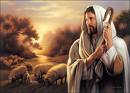
I am going to go way out on a precarious limb and talk about parenting teens, while still in the midst of this great joyous and painful experience. A popular psychologist and speaker on family issues once said that raising teenagers is like nailing jello to a wall-- in a word, frustrating. When I was awaiting my number one child, I had heard so many horror stories about those teen years that the first book I bought was one on parenting teens. I guess I had an inkling that there was a key component here that is universal in all stages of life; the title of the book—How to Really Love Your Teen. The book was helpful and I still draw on its wise words. But there is another book that is completely invaluable. The Gospels are a wealth of timeless parenting advice. What more can we do for our kids than love them like Jesus loves us?
The story of the rich young man (Mark 10:17-22) is a teaching on letting go of earthly attachments, but hidden in its words is a teaching on parenting so beautiful that it brings tears to my eyes. This young man was a really good kid and he had a desire to be close to God, and yet when Jesus told him the next step—give up everything he had-- he could not take it and walked away sadly. The parenting point here lies in Jesus’ response. Existing out of time, Jesus knew that the young man would not follow through. And yet, he looked at him with love. … and he let him walk away without a scolding.
Teens are standing at the brink of adulthood. This is essentially what is frustrating. They are capable of making adult decisions and choices. All the same, they will at times make childlike decisions and choices. Then there are the choices that come from some hormonal netherworld that no one understands, including teens themselves. I remember being fourteen and standing before my mother greatly desiring her help on some school work. I remember distinctly the war within me—as much as I wanted her help, I could not accept it. She was irritating me to my bone marrow. She responded by turning me loose, and I became one of the original unschooled teenagers of the seventies. Fortunately I loved to learn so it worked out for me.
I am not made of the stern stuff my little German mother possessed. I can’t cut my kids loose like this and our household has witnessed many a “to the mat” struggle, will against will. The times when we all win are those when I lift it up to God and give way. You really have to pick your battles. God created us with free will and he wants us to use it freely. Teens are learning to use their free will and too many fences don’t make for freedom.
There are two extremes of parenting. Being too light handed is essentially giving up on them when they still really need guidance. Over-parenting, exacting punishments for every little infraction, micro-managing, suffocates them. Every parent tends toward either extreme at times, but there is a lot of area that works in between. Here are some little insights I have gained over the last few years. Forgive your children and ask forgiveness as needed. Don’t be self-righteous. Teens need to know “why” not just “what.” Listen to them; they have real things to say. They are not an extension of their parents, but individuals. They will make mistakes, but almost any mistake can be fixed, and it is precisely when they are in the midst of a mess that they need the most love. Pray and pray some more. If they learn to love and be loved, you have taught them the most important lesson of all.
Now that I have written all this, here I am out on the limb. I can guarantee that within the next twenty four hours we will have an experience in our household that proves I can’t follow my own advice.
Some of the wisest words I have ever heard, were from a dear friend of mine. She talked about how much she worried when her boys were old enough to drive. Then one day she realized that as much as she loved them, God loved them more. (Thanks, Deanna)
Thursday, December 31, 2009

Friday, December 25, 2009
Look at Him!
Christmas 2007
This year our local theater brought to the stage The Best Christmas
Pageant Ever. The story is a classic, the theme being the clash between
believers and the so-called ignorant. The outcome is a muddying of
the lines between the two. The Herdmanns are a family of miscreants who
descend upon the church to take over the annual Christmas pageant, much to
the dismay of the fastidious church regulars. They are treated to their first time
through the Christmas story and end up with the leading roles, Mary,
Joseph, angels and wisemen. Looking at the story from their totally fresh
standpoint and interpreting the roles in brand new ways ends up lending the
show the title, The Best Ever.
A favorite is Gladys Herdmann’s angel. This angel is not satisfied with
proclaiming “Rejoice!” in King James’ best English. She adds some splash fitting
such an event. “Shazammmm!!!” is her announcement. Then determined that
no one will miss the stupendous happening in the cow barn, she yells at the
hesitant shepherds, “Hey, hey!! Unto you a child is born. It’s Jesus, and he’s
there in the barn! Right there! LOOK AT HIM!”
Maybe we need this kind of John the Baptist approach today. Christians who
should know better often get numbed by the hustle of the holiday and forget
the reason.
The magic of God become Man—not in the sense of the occult, but in the
sense of that which is beyond human power or understanding or imagination---is
reflected in everything we do during this season. The lights, the gifts, the baking
are all symbolic of that Great Miracle and Gift. Sans God, these holiday activities
are only futile, frenzied attempts to satisfy a hunger for God.
Listen to the old carols, written back when people didn’t have so much stuff
getting between them and the Baby. I especially love, “O Holy Night!”
“The stars are brightly shining, it is the night of the Dear Savior’s birth. Long
lay the world in sin and error pining, till he appeared and the soul felt its worth.
A thrill of hope, the weary world rejoices, for yonder breaks a new and glorious
morn.”
What tells us of our great worth, brings true joy and the eternal hope of a
new beginning? Not stuff, not goodies, not loaded eggnog, not more speed,
power, money or sex. God coming to earth to be born in poverty of a woman,
and dying on the cross for each one of us is how we know our worth.
That is why we are so profoundly sad when our lives are not filled with love,
when we are labeled as worthless by those around us or feel this way from
events in our lives. This love is most fulfilled when it is given in return. A life not spent in giving is cold as a tomb.
Christians, stop and look at Him. Listen closely to the old carols. Falling
love again. Non-Christians, a challenge, stop using the behavior of individual
Christians as an excuse to avoid Christ—look at Him, discover Him for yourselves.
Everyone—just stop and LOOK AT HIM!!!
This year our local theater brought to the stage The Best Christmas
Pageant Ever. The story is a classic, the theme being the clash between
believers and the so-called ignorant. The outcome is a muddying of
the lines between the two. The Herdmanns are a family of miscreants who
descend upon the church to take over the annual Christmas pageant, much to
the dismay of the fastidious church regulars. They are treated to their first time
through the Christmas story and end up with the leading roles, Mary,
Joseph, angels and wisemen. Looking at the story from their totally fresh
standpoint and interpreting the roles in brand new ways ends up lending the
show the title, The Best Ever.
A favorite is Gladys Herdmann’s angel. This angel is not satisfied with
proclaiming “Rejoice!” in King James’ best English. She adds some splash fitting
such an event. “Shazammmm!!!” is her announcement. Then determined that
no one will miss the stupendous happening in the cow barn, she yells at the
hesitant shepherds, “Hey, hey!! Unto you a child is born. It’s Jesus, and he’s
there in the barn! Right there! LOOK AT HIM!”
Maybe we need this kind of John the Baptist approach today. Christians who
should know better often get numbed by the hustle of the holiday and forget
the reason.
The magic of God become Man—not in the sense of the occult, but in the
sense of that which is beyond human power or understanding or imagination---is
reflected in everything we do during this season. The lights, the gifts, the baking
are all symbolic of that Great Miracle and Gift. Sans God, these holiday activities
are only futile, frenzied attempts to satisfy a hunger for God.
Listen to the old carols, written back when people didn’t have so much stuff
getting between them and the Baby. I especially love, “O Holy Night!”
“The stars are brightly shining, it is the night of the Dear Savior’s birth. Long
lay the world in sin and error pining, till he appeared and the soul felt its worth.
A thrill of hope, the weary world rejoices, for yonder breaks a new and glorious
morn.”
What tells us of our great worth, brings true joy and the eternal hope of a
new beginning? Not stuff, not goodies, not loaded eggnog, not more speed,
power, money or sex. God coming to earth to be born in poverty of a woman,
and dying on the cross for each one of us is how we know our worth.
That is why we are so profoundly sad when our lives are not filled with love,
when we are labeled as worthless by those around us or feel this way from
events in our lives. This love is most fulfilled when it is given in return. A life not spent in giving is cold as a tomb.
Christians, stop and look at Him. Listen closely to the old carols. Falling
love again. Non-Christians, a challenge, stop using the behavior of individual
Christians as an excuse to avoid Christ—look at Him, discover Him for yourselves.
Everyone—just stop and LOOK AT HIM!!!
What is a Christian?
The simplistic answer to this question is that a Christian is a believer and follower of Jesus the Christ. This is a comforting but rather broad statement. Some clarification is in order. The Christian believes in the Triune God; that is, one God in three Divine persons, Father, Son and Holy Spirit---the Trinity. He believes that God is pure love and all merciful. The Christian believes that humanity, while created for God, was separated from God through a free choice for sin, and is in need of a healer. That healer is Jesus, who lived a teaching, guiding life and died a redeeming death on a cross. Christians are a people of the Resurrection, believing that Jesus rose from the dead, to conquer the death of sin eternally. All basic Christian doctrines are contingent upon each other and cannot be fully authentic if taken separately.
What are the outward signs of a Christian? A Christian is baptized in the name of the Father, the Son and the Holy Spirit. A Christian follows Christ according to the plan laid down in a book called the Holy Bible. A Christian is confident in God’s forgiveness of sin when confessed with true sorrow. A Christian keeps in contact with God on a daily basis through prayers of praise, petition, thanksgiving and contrition for sin.
A Christian should be identifiable by his lifestyle. Many Faith Forum writers have illustrated details of a Christian life. An Episcopal priest recently wrote about loving others through simple things, as simple as driving courteously. Unconditional love is central to the Christian faith.
A young pastor I know who shepherds a local Christian Fellowship, always shows a passion for the Word of God, and a willingness to read and share it without reservation. Christians are called to share the message of Christ. This is something which is politically incorrect in today’s world, but it is our commission.
A couple of other writers in our local papers religious forum have dispelled myths about Christians. The pastor of the Nazarene church often illustrates that a Christian does not have to be uptight, but can enjoy the good things in life—like motorcycle riding and traditional holidays. The pastor of the Assembly of God has shown numerous times that Christians do not avoid intellectual questions of science or philosophy but see these as gifts from God. A Christian rejoices in the study of God’s Creation.
Some folk are confused by the Christian concept of sin. Although Christians strive to live in a way that shows unconditional love, they accept that sin is a damaging reality in our lives. A Christian must be honest about this and while not condemning others for their lifestyle, cannot be anything but objective in avoiding a sinful lifestyle, as directed in the Word of God.
Now a Catholic Christian is all of the above, and in addition, believes that the Bible shows clearly that Christ established a church with a sacred priesthood and a sacramental system. Central to the Catholic faith is a belief that Christ, the night before he died, gave us a commission to commemorate his death and resurrection, (the Mass) and gave us a gratuitous gift for our spiritual sustenance—his Flesh and Blood under the appearance of bread and wine, to be administered by a priesthood until the end of time.
What are the outward signs of a Christian? A Christian is baptized in the name of the Father, the Son and the Holy Spirit. A Christian follows Christ according to the plan laid down in a book called the Holy Bible. A Christian is confident in God’s forgiveness of sin when confessed with true sorrow. A Christian keeps in contact with God on a daily basis through prayers of praise, petition, thanksgiving and contrition for sin.
A Christian should be identifiable by his lifestyle. Many Faith Forum writers have illustrated details of a Christian life. An Episcopal priest recently wrote about loving others through simple things, as simple as driving courteously. Unconditional love is central to the Christian faith.
A young pastor I know who shepherds a local Christian Fellowship, always shows a passion for the Word of God, and a willingness to read and share it without reservation. Christians are called to share the message of Christ. This is something which is politically incorrect in today’s world, but it is our commission.
A couple of other writers in our local papers religious forum have dispelled myths about Christians. The pastor of the Nazarene church often illustrates that a Christian does not have to be uptight, but can enjoy the good things in life—like motorcycle riding and traditional holidays. The pastor of the Assembly of God has shown numerous times that Christians do not avoid intellectual questions of science or philosophy but see these as gifts from God. A Christian rejoices in the study of God’s Creation.
Some folk are confused by the Christian concept of sin. Although Christians strive to live in a way that shows unconditional love, they accept that sin is a damaging reality in our lives. A Christian must be honest about this and while not condemning others for their lifestyle, cannot be anything but objective in avoiding a sinful lifestyle, as directed in the Word of God.
Now a Catholic Christian is all of the above, and in addition, believes that the Bible shows clearly that Christ established a church with a sacred priesthood and a sacramental system. Central to the Catholic faith is a belief that Christ, the night before he died, gave us a commission to commemorate his death and resurrection, (the Mass) and gave us a gratuitous gift for our spiritual sustenance—his Flesh and Blood under the appearance of bread and wine, to be administered by a priesthood until the end of time.
Grace and Wilde
Grace is like the air that we breathe. We cannot see it, but we can feel it and we cannot have eternal Life without it. Grace is “….. the free and undeserved help that God gives us to respond to his call to become children of God…..partakers of the divine nature and of eternal life…it surpasses the power of human intellect and will…is infused by the Holy Spirit into our soul to heal it of sin and to sanctify it.” (Catechism of the Catholic Church 1994)
Sometimes we want to be the purveyors of grace ourselves. We make judgments about others based on our perception of their lifestyle, and we make judgments upon ourselves based on our self-hatred. We forget that every single person on this earth, past, present and future, has been bought at the same price---the oblation of God’s son, and we forget that God our loving Father does not will even one soul to be lost forever. Some people undoubtedly reject the gift of grace and end up lost. And yet, we must remain ever hopeful and mindful of God’s mercy and of our part in his plan.
Oscar Wilde, 19th century Irish author of great ability, made an enduring name for himself as a man who stepped outside of his time in terms of his sexual lifestyle. His autobiographical novel, The Picture of Dorian Gray, tells the story of a young man, groomed into a promiscuous lifestyle through the enchantment of an older man. Self-love was his weakness and he fell to the sirens of hedonism. Wilde himself, became predatory in seeking youthful partners to satisfy his addiction. While being the eccentric and intelligent darling of the artsy population, he was not a happy person. Insights into his soul are to be found in his novel and in his poetry. Wilde lived in the spiritual agony which Paul hinted at, bemoaning the willingness of his spirit and the weakness of his flesh.
After spending some time in jail, Wilde walked away from his life, spending his last three years in isolation. He had a close Christian friend who refused to take him seriously when he requested some support in seeking out the Church for help. Eventually, a young priest found his way to the dying man’s bedside and shepherded him back to peace with God. The point is, Christians should be there for their friends, ready to help nurture with Christ’s love, any stirring of grace in that person’s soul.
“Come down, O Christ and help me! Reach thy hand, for I am drowning in a stormier sea than Simon on thy lake of Galilee: the wine of life is spilt upon the sand, My heart is as some famine murdered land, Whence all good things have perished utterly, and well I know my soul in Hell must lie, If I this night before God’s throne should stand….Nay peace, I shall behold , before the night,, the feet of brass, the robe more white than flame, the wounded hands, the weary human face.” E Tenebris, Wilde
Sometimes we want to be the purveyors of grace ourselves. We make judgments about others based on our perception of their lifestyle, and we make judgments upon ourselves based on our self-hatred. We forget that every single person on this earth, past, present and future, has been bought at the same price---the oblation of God’s son, and we forget that God our loving Father does not will even one soul to be lost forever. Some people undoubtedly reject the gift of grace and end up lost. And yet, we must remain ever hopeful and mindful of God’s mercy and of our part in his plan.
Oscar Wilde, 19th century Irish author of great ability, made an enduring name for himself as a man who stepped outside of his time in terms of his sexual lifestyle. His autobiographical novel, The Picture of Dorian Gray, tells the story of a young man, groomed into a promiscuous lifestyle through the enchantment of an older man. Self-love was his weakness and he fell to the sirens of hedonism. Wilde himself, became predatory in seeking youthful partners to satisfy his addiction. While being the eccentric and intelligent darling of the artsy population, he was not a happy person. Insights into his soul are to be found in his novel and in his poetry. Wilde lived in the spiritual agony which Paul hinted at, bemoaning the willingness of his spirit and the weakness of his flesh.
After spending some time in jail, Wilde walked away from his life, spending his last three years in isolation. He had a close Christian friend who refused to take him seriously when he requested some support in seeking out the Church for help. Eventually, a young priest found his way to the dying man’s bedside and shepherded him back to peace with God. The point is, Christians should be there for their friends, ready to help nurture with Christ’s love, any stirring of grace in that person’s soul.
“Come down, O Christ and help me! Reach thy hand, for I am drowning in a stormier sea than Simon on thy lake of Galilee: the wine of life is spilt upon the sand, My heart is as some famine murdered land, Whence all good things have perished utterly, and well I know my soul in Hell must lie, If I this night before God’s throne should stand….Nay peace, I shall behold , before the night,, the feet of brass, the robe more white than flame, the wounded hands, the weary human face.” E Tenebris, Wilde
Fishy People
Faith Forum
My nephew just bought his first car, a sweet little Toyota truck. I am very proud of him. He is a very conscientious, oldest child, a hard worker, who never complains when people ask him for help. As a young driver, he will not give his mother too much headache, I think.
I noticed that the previous owners had adhered a metallic fish to the tailgate. The fish appeared to be your usual fish, simple and, well, fish like, proclaiming the driver a Christian. Then, I realized that it was really a rack of bones. Is that the anti-Christ fish? Or maybe the Nietzsche fish---God is dead. Interesting.
What is this with the fish? The simple fish says, I am a Christian. You have the Darwin fish—which, my best guess, says I am not a Christian, I am a Darwinist. Then there is the Big Jesus fish eating the Darwin fish. There’s a thought. I have also seen a big fish with shark fins. Not sure what that is…There is also the dead Darwin fish. I really like the alien fish. It seems to say, “ Lighten up everyone. “ If there are aliens, maybe they have little fish on the back of their hovercraft. Now there is the dead fish. And where did all this fish stuff begin?
Hundreds of years ago, when Christianity was brand new, the ichthus , which means fish in Greek, was a secret sign. Scrawled furtively in the dust at the feet of two strangers, or scratched into the stone of a passageway, the symbol told others, that here was a Christian, or a place of Christian worship. In an age when being a Christian was a death sentence, the secret sign was powerful. To be Christian in those days, meant you had accepted the faith of Christ with all your heart and were not afraid of dying for Christ. It was a time of stout hearts in the Christian world.
What does the ichthus mean today? I hope it means the same thing. I hope that those who carry the sign on their cars, or business cards, or storefronts, truly are Christian, not just in their talk but in their walk. I wonder how stouthearted are we? If the Nietzsche fish, and the Darwin fish and the Shark fish turned and swam into our midst would we flee like minnows?
My nephew just bought his first car, a sweet little Toyota truck. I am very proud of him. He is a very conscientious, oldest child, a hard worker, who never complains when people ask him for help. As a young driver, he will not give his mother too much headache, I think.
I noticed that the previous owners had adhered a metallic fish to the tailgate. The fish appeared to be your usual fish, simple and, well, fish like, proclaiming the driver a Christian. Then, I realized that it was really a rack of bones. Is that the anti-Christ fish? Or maybe the Nietzsche fish---God is dead. Interesting.
What is this with the fish? The simple fish says, I am a Christian. You have the Darwin fish—which, my best guess, says I am not a Christian, I am a Darwinist. Then there is the Big Jesus fish eating the Darwin fish. There’s a thought. I have also seen a big fish with shark fins. Not sure what that is…There is also the dead Darwin fish. I really like the alien fish. It seems to say, “ Lighten up everyone. “ If there are aliens, maybe they have little fish on the back of their hovercraft. Now there is the dead fish. And where did all this fish stuff begin?
Hundreds of years ago, when Christianity was brand new, the ichthus , which means fish in Greek, was a secret sign. Scrawled furtively in the dust at the feet of two strangers, or scratched into the stone of a passageway, the symbol told others, that here was a Christian, or a place of Christian worship. In an age when being a Christian was a death sentence, the secret sign was powerful. To be Christian in those days, meant you had accepted the faith of Christ with all your heart and were not afraid of dying for Christ. It was a time of stout hearts in the Christian world.
What does the ichthus mean today? I hope it means the same thing. I hope that those who carry the sign on their cars, or business cards, or storefronts, truly are Christian, not just in their talk but in their walk. I wonder how stouthearted are we? If the Nietzsche fish, and the Darwin fish and the Shark fish turned and swam into our midst would we flee like minnows?
Thursday, August 13, 2009
I'm Marrying the Jinx (So There)
When I was little, my sister and I would play a card game that involved animal characters. To be left with the cat of nines, the Jinx, was sudden death. My sister was competitive at the age of four but, being younger, she did sometimes get left with the Jinx. Whereupon, she would avow that she was going to marry the Jinx. She changed the rules in her head and moved on, still winning. ( Monopoly was impossible with her. She landed on my Boardwalk once and immediately drew blood from my arm with her little teeth.) I am happy to say she has left her psychotic competitiveness behind and is a well-adjusted woman, devoted to faith, family and service.
I think many of us retain a mindless need to win that disregards rules, or even truth at times. It is popular today to change the definition of truth to match our needs, our choices, our desires. When we make a bad choice and call it a good choice we are bending truth to match our actions. We have a natural desire for good but it is often overshadowed by our selfishness.
We see this avoidance of truth very clearly in the abortion debate. Denying the life of the unborn, ignoring the life of the unborn, attacking the imagined character of the protector of the unborn, emotional “what if” appeals, leaning on worst case scenarios while still avoiding the real issue are all methods used in avoiding addressing the truth—that the unborn are live human beings with an equal right to life.
What a vista opens up before us when we grasp at the concept that truth is relative to the individual. A man can say, “I am married to this person. I promised to be with her alone. And yet, I am attracted to that one over there. Lo, that is a good thing. I will go over there.” A woman can say, “I have this child, and yet I really want to take a trip to the Riviera. I will take the money for his school clothes and go. It is something I want and it is good. “ A developer can say, “The ground is unstable here and the geologist’s reports don’t look good. Yet, I will lose money if I don’t continue with the building. I have to continue the project.” An employee might say, “I am not making ends meet. I will skim some cash from the drawer.” or “my employer is mean so I will sit down here and read a book instead of working.” A Reader’s Digest poll once found that a majority of Americans think it is ok to steal from a big corporation, on the contention that big companies won’t miss the money.
Some people have a problem with the Christian concept of loving the sinner, hating the sin. When Christians follow Christ and his words in red, they are called unloving, intolerant, and hypocritical. The modern world has repainted Jesus in monotones. In today’s world, an inclusive Jesus who does not judge, or point out evil, or castigate sinners is preferred. This is a mythical Jesus. Jesus was inclusive all right—he died for all people. He was loving—he healed all who came to him. But what did he do first? He healed souls, forgiving the individuals’ sins. Sin is not the person. Sin hurts the person. Everyday in our world selfish choices cause pain and death—the death of peace, happiness and hope.
There is something creepy about floundering in a world where there is no objective Truth. We lose our intrinsic dignity. We become shadow beings with no foundation. To say that truth changes with the individual is to hold onto a bag of sterile platitudes. In a world where anything goes, someone always gets left holding the bag. Peace cannot consist in everyone getting his own way. Where do we stand down? At the Word of the Lord. And don’t avoid it.
“And this is the verdict, that the light came into the world, but people preferred darkness to the light, because their works were evil. For everyone who does wicked things hates the light and does not come toward the light, so that his works might not be exposed.” “ John 3:19-20
I think many of us retain a mindless need to win that disregards rules, or even truth at times. It is popular today to change the definition of truth to match our needs, our choices, our desires. When we make a bad choice and call it a good choice we are bending truth to match our actions. We have a natural desire for good but it is often overshadowed by our selfishness.
We see this avoidance of truth very clearly in the abortion debate. Denying the life of the unborn, ignoring the life of the unborn, attacking the imagined character of the protector of the unborn, emotional “what if” appeals, leaning on worst case scenarios while still avoiding the real issue are all methods used in avoiding addressing the truth—that the unborn are live human beings with an equal right to life.
What a vista opens up before us when we grasp at the concept that truth is relative to the individual. A man can say, “I am married to this person. I promised to be with her alone. And yet, I am attracted to that one over there. Lo, that is a good thing. I will go over there.” A woman can say, “I have this child, and yet I really want to take a trip to the Riviera. I will take the money for his school clothes and go. It is something I want and it is good. “ A developer can say, “The ground is unstable here and the geologist’s reports don’t look good. Yet, I will lose money if I don’t continue with the building. I have to continue the project.” An employee might say, “I am not making ends meet. I will skim some cash from the drawer.” or “my employer is mean so I will sit down here and read a book instead of working.” A Reader’s Digest poll once found that a majority of Americans think it is ok to steal from a big corporation, on the contention that big companies won’t miss the money.
Some people have a problem with the Christian concept of loving the sinner, hating the sin. When Christians follow Christ and his words in red, they are called unloving, intolerant, and hypocritical. The modern world has repainted Jesus in monotones. In today’s world, an inclusive Jesus who does not judge, or point out evil, or castigate sinners is preferred. This is a mythical Jesus. Jesus was inclusive all right—he died for all people. He was loving—he healed all who came to him. But what did he do first? He healed souls, forgiving the individuals’ sins. Sin is not the person. Sin hurts the person. Everyday in our world selfish choices cause pain and death—the death of peace, happiness and hope.
There is something creepy about floundering in a world where there is no objective Truth. We lose our intrinsic dignity. We become shadow beings with no foundation. To say that truth changes with the individual is to hold onto a bag of sterile platitudes. In a world where anything goes, someone always gets left holding the bag. Peace cannot consist in everyone getting his own way. Where do we stand down? At the Word of the Lord. And don’t avoid it.
“And this is the verdict, that the light came into the world, but people preferred darkness to the light, because their works were evil. For everyone who does wicked things hates the light and does not come toward the light, so that his works might not be exposed.” “ John 3:19-20
Thursday, July 9, 2009
Lessons from Animals
I am not an animal person really. I prefer the company of people, but I do see the value of the family dog. Our dog is a trusting, ever-present equalizer. With her big, brown eyes and genial. tongue-out smile, she melts hard feelings and encourages sad hearts. She prefers to be in the middle of family gatherings and casually claims the fireplace while we watch movies on winter nights. During family arguments, she tells us when we have ceased to be considerate of each others, feelings by quietly leaving the room.
Animals have great worth in the human experience. I believe that the study of animal behavior can give us an insight on our own spiritual behavior. Tim Buehler, one of our BHHS teachers, spoke about vultures at the 2008 graduation ceremony. No, he wasn't warning our teens about their futures and the IRS. He pointed out that a vulture trapped in a wide open box will stay there until it dies, because it needs running room to fly. He used the example to show our young people that if they feel trapped they should look up.
I think many of us look for the Lord when we are in trouble. Unfortunately, we tend to forget about Him when things are good. We get trapped by stuff. There is a little monkey in India that is easily caught by a hanging gourd. The gourd has an opening big enough for the little fellow's hand. He eagerly reaches in to grab the goodies inside but once he has a fist full, he is stuck. His closed fist is too big to come back through the hole and he will not let loose the goodies. How often do we let everyday things and events get so important that we stop making room for God?
Sometimes fear traps us and we must calm ourselves enough to trust in God. Once, when I was a young teen, I was riding my Shetland pony along the county road. She stopped abruptly and would not move. I looked down and saw that she had stepped into a snarl of cast-off barb wire. She looked at me and waited. I slid off, and carefully extracted her foot from the vicious bundle, and we continued our journey. Most horse breeds, when encountering this type of trap, would freak out, becoming more and more entangled, ripping flesh from their legs. Many people think they have faith, but their fear enslaves them and they lack the total trust that comes with full faith.
I remember my Dad telling about he gila monsters that lived in the desert where he grew up. They are stout little lizards which possess great chomping strength. They are fearsome predators, but you could easily pack one home, by offering it a sturdy stick. Once it has a grip on the stick , it will not let go. Some people are not entering into a living relationship with their Lord because they will not give up control of their lives, They equate belief with weakness.
Our family had a donkey. Pedey had a free spirit which sometimes led him to escape into the neighbor's alfalfa field. This is not a safe environment for an equine. He had great patience and as often as you followed him, trying to catch him, he stayed one step out of reach. He didn't do a lot of running. He used his intellect. Some people think they don't need God if they can use their brains. Meanwhile, if they are eating heartily from a green alfalfa field, they will die.
I found out that Pedey's curiosity was his Achilles heel. If I sat down in the middle of the field, eventually he would wander closer and closer until his nose was in my lap, just trying to figure out my strange behavior. Some people's curiosity is their downfall, leading them to rash decisions and unhealthy, self-abusive lifestyles that exclude room for God. Of course, in Pedey's case, his curiosity was his salvation, bringing him back from a big belly ache.
One wouldn't think chickens were anything like people. yet, I believe it was B F Skinner who studied chicken behavior and applied it to child psychology, developing modern education techniques. We raised chickens when I was a kid. Watching those self-centered little fluff balls running around eating, sleeping and picking on each other, I certainly would hope my own children rise above that mentality. I much prefer the wisdom of the family dog we had at the time. Mario was very protective of the little chicks, and having been raised with them, had no desire to become a chicken killer. He watched over them as he did the rest to ft he myriad animals on our little farm. Kind of reminds. me of someone else.....
Animals have great worth in the human experience. I believe that the study of animal behavior can give us an insight on our own spiritual behavior. Tim Buehler, one of our BHHS teachers, spoke about vultures at the 2008 graduation ceremony. No, he wasn't warning our teens about their futures and the IRS. He pointed out that a vulture trapped in a wide open box will stay there until it dies, because it needs running room to fly. He used the example to show our young people that if they feel trapped they should look up.
I think many of us look for the Lord when we are in trouble. Unfortunately, we tend to forget about Him when things are good. We get trapped by stuff. There is a little monkey in India that is easily caught by a hanging gourd. The gourd has an opening big enough for the little fellow's hand. He eagerly reaches in to grab the goodies inside but once he has a fist full, he is stuck. His closed fist is too big to come back through the hole and he will not let loose the goodies. How often do we let everyday things and events get so important that we stop making room for God?
Sometimes fear traps us and we must calm ourselves enough to trust in God. Once, when I was a young teen, I was riding my Shetland pony along the county road. She stopped abruptly and would not move. I looked down and saw that she had stepped into a snarl of cast-off barb wire. She looked at me and waited. I slid off, and carefully extracted her foot from the vicious bundle, and we continued our journey. Most horse breeds, when encountering this type of trap, would freak out, becoming more and more entangled, ripping flesh from their legs. Many people think they have faith, but their fear enslaves them and they lack the total trust that comes with full faith.
I remember my Dad telling about he gila monsters that lived in the desert where he grew up. They are stout little lizards which possess great chomping strength. They are fearsome predators, but you could easily pack one home, by offering it a sturdy stick. Once it has a grip on the stick , it will not let go. Some people are not entering into a living relationship with their Lord because they will not give up control of their lives, They equate belief with weakness.
Our family had a donkey. Pedey had a free spirit which sometimes led him to escape into the neighbor's alfalfa field. This is not a safe environment for an equine. He had great patience and as often as you followed him, trying to catch him, he stayed one step out of reach. He didn't do a lot of running. He used his intellect. Some people think they don't need God if they can use their brains. Meanwhile, if they are eating heartily from a green alfalfa field, they will die.
I found out that Pedey's curiosity was his Achilles heel. If I sat down in the middle of the field, eventually he would wander closer and closer until his nose was in my lap, just trying to figure out my strange behavior. Some people's curiosity is their downfall, leading them to rash decisions and unhealthy, self-abusive lifestyles that exclude room for God. Of course, in Pedey's case, his curiosity was his salvation, bringing him back from a big belly ache.
One wouldn't think chickens were anything like people. yet, I believe it was B F Skinner who studied chicken behavior and applied it to child psychology, developing modern education techniques. We raised chickens when I was a kid. Watching those self-centered little fluff balls running around eating, sleeping and picking on each other, I certainly would hope my own children rise above that mentality. I much prefer the wisdom of the family dog we had at the time. Mario was very protective of the little chicks, and having been raised with them, had no desire to become a chicken killer. He watched over them as he did the rest to ft he myriad animals on our little farm. Kind of reminds. me of someone else.....
Wednesday, July 8, 2009
Keeper Pile
"But Mom, where is my soul and what does it look like?" It is inevitable. If you are going to be discussing God and immortality with your child, the unanswerable question will arise. You can brush it off with the standard, "No one knows," or "It doesn't matter." Or you can have fun with it and ponder, with the help of your child's superior imagination, a soul that is so invisible to us and yet so beautiful and precious to our Creator.
The thing is, the way God sees souls is a lot different from the way we see people. If God were to sort souls out as a child sorts marbles or pebbles, none would go in the ugly pile He loves us all with agape that is absolutely unconditional. He also understands our inability to see each other this way and sent us a clear Gospel instruction on how to fix this blindness.
When Jesus brought up the story of the Good Samaritan, he really had the Jewish men around him buzzing. Not only was he challenging their lack of charity, but he was pointing out that sometimes we can learn from others whom we would ordinarily look down upon. The Samaritan, "scum" that he was, was the only man who followed his sense of natural law--that instinct for right and wrong-- and acted in a truly loving way to the beaten traveler.
Lessons in charity can come from any direction if we are open. Basically, we must look through the black or white, fat or skinny, addicted or clean, legal or alien, stable or struggling, mobile home park or ocean front condo dwelling, irritating lack of social skills or pompous self-righteousness and see every soul as bought at the same terrific price--the last drop of His Son's blood. Imagine, if you will, a parade of people that you have come across in your life, people you have judged on outward impression.
The overweight woman in front of you in the grocery line--did you superciliously not the junk food in her cart and congratulate yourself on your purchase of spinach and hummus? Did you forget that her soul is the same weight as yours? What about the Hispanic family enjoying a Sunday afternoon on the river next to your group. Did you grumble about their lack of ability to communicate in you language and wonder if they had green cards? Or did you ask yourself how you could be Jesus to them today? And your next door neighbor whom you seem to have nothing in common with, are you avoiding thinking about them, or praying for them?
God challenges us every day to see Jesus in our neighbor. The crafty Hebrew scholar, asking, "well who exactly is my neighbor," trying to find a loophole for indifference. Everyone is a neighbor. We learn much from Mother Teresa, that tiny little nun who had the guts to go full bore for Jesus. She dragged worm infested untouchable out of the gutter to take home and love until they died. She also turned a concerned eye to Americans and lectured us on our poverty of ignorance. Everyone ws equally important to her, because she knew all souls are all meant fo the keeper pile.
The thing is, the way God sees souls is a lot different from the way we see people. If God were to sort souls out as a child sorts marbles or pebbles, none would go in the ugly pile He loves us all with agape that is absolutely unconditional. He also understands our inability to see each other this way and sent us a clear Gospel instruction on how to fix this blindness.
When Jesus brought up the story of the Good Samaritan, he really had the Jewish men around him buzzing. Not only was he challenging their lack of charity, but he was pointing out that sometimes we can learn from others whom we would ordinarily look down upon. The Samaritan, "scum" that he was, was the only man who followed his sense of natural law--that instinct for right and wrong-- and acted in a truly loving way to the beaten traveler.
Lessons in charity can come from any direction if we are open. Basically, we must look through the black or white, fat or skinny, addicted or clean, legal or alien, stable or struggling, mobile home park or ocean front condo dwelling, irritating lack of social skills or pompous self-righteousness and see every soul as bought at the same terrific price--the last drop of His Son's blood. Imagine, if you will, a parade of people that you have come across in your life, people you have judged on outward impression.
The overweight woman in front of you in the grocery line--did you superciliously not the junk food in her cart and congratulate yourself on your purchase of spinach and hummus? Did you forget that her soul is the same weight as yours? What about the Hispanic family enjoying a Sunday afternoon on the river next to your group. Did you grumble about their lack of ability to communicate in you language and wonder if they had green cards? Or did you ask yourself how you could be Jesus to them today? And your next door neighbor whom you seem to have nothing in common with, are you avoiding thinking about them, or praying for them?
God challenges us every day to see Jesus in our neighbor. The crafty Hebrew scholar, asking, "well who exactly is my neighbor," trying to find a loophole for indifference. Everyone is a neighbor. We learn much from Mother Teresa, that tiny little nun who had the guts to go full bore for Jesus. She dragged worm infested untouchable out of the gutter to take home and love until they died. She also turned a concerned eye to Americans and lectured us on our poverty of ignorance. Everyone ws equally important to her, because she knew all souls are all meant fo the keeper pile.
Tuesday, July 7, 2009
Kindness
"Fill me at daybreak with your kindness, O Lord, that I might shout with joy and gladness all the days of my life."
Somewhere in the late eighties or early nineties, rude became fashionable. Little bunnies saying "bite me" or "you're stupid, I'm not" popped up on teenagers' t-shirts. The acid tongue became the normal communication among professional, upward movers as well as family members. Perhaps sarcasm has always been the fare of comedy, but courtesy in daily life has gone out the window. This is not a good thing.
Some of this is sanctioned by an attitude of putting oneself, one's needs and desires first, lest one come out with less than the biggest piece of the pie. It used to be a given that the last piece of pie would stay forever, because no one wanted to be the pig. Now the hero is the one who reaches in a grabs the last piece for himself. The liberated person is the one who speaks his mind, regardless of the feelings of those around him.
Kindness-- it seems a simple offering, but sometimes it is the hardest thing to offer. I really want to walk in kindness. I would love to never have an angry word for another human being. I want to drive down the street, see the poor driving maneuver of another motorist, and think, "That poor person must be having a bad day," or even whisper a blessing upon them. I desire with all my heart to never raise my voice against my children. I want to give everyone the benefit of doubt, no matter how they present themselves. I do not want to ever gossip at the expense of another. These things are not easy. And too often I lapse to the default mode of "how dare you confront me!" or "isn't it delightful that this or that person has made a complete fool of herself, mostly because it makes me look so good."
We have a fairly high degree of proactive kindness in our world today. Everyone really wants to reach out and help others in hardship. Unfortunately, we have a low degree of reactive kindness. People tend to bristle like harassed hedgehogs when crossed. This is where the challenge lies.
I would like to be a part of breaking this attitude of rudeness. I think it means I must hand over my needs in favor of others. A lot of times, what we tacitly think of as a "need" is not a necessity at all. I don't need to have the last word in an argument. I don't need to vent on unknown motorists. I don't need to yell at the kids. I don't need the last piece of pie, or even the first if there is someone else out there who needs it more. I don't need to participate in trash talk about some other poor soul.
Kindness doesn't mean lying down as a doormat for every user out there. It means seeing people always as God sees them. It means listening, responding, putting others first. If the added benefit is joy and gladness which is inner peace, who loses?
Somewhere in the late eighties or early nineties, rude became fashionable. Little bunnies saying "bite me" or "you're stupid, I'm not" popped up on teenagers' t-shirts. The acid tongue became the normal communication among professional, upward movers as well as family members. Perhaps sarcasm has always been the fare of comedy, but courtesy in daily life has gone out the window. This is not a good thing.
Some of this is sanctioned by an attitude of putting oneself, one's needs and desires first, lest one come out with less than the biggest piece of the pie. It used to be a given that the last piece of pie would stay forever, because no one wanted to be the pig. Now the hero is the one who reaches in a grabs the last piece for himself. The liberated person is the one who speaks his mind, regardless of the feelings of those around him.
Kindness-- it seems a simple offering, but sometimes it is the hardest thing to offer. I really want to walk in kindness. I would love to never have an angry word for another human being. I want to drive down the street, see the poor driving maneuver of another motorist, and think, "That poor person must be having a bad day," or even whisper a blessing upon them. I desire with all my heart to never raise my voice against my children. I want to give everyone the benefit of doubt, no matter how they present themselves. I do not want to ever gossip at the expense of another. These things are not easy. And too often I lapse to the default mode of "how dare you confront me!" or "isn't it delightful that this or that person has made a complete fool of herself, mostly because it makes me look so good."
We have a fairly high degree of proactive kindness in our world today. Everyone really wants to reach out and help others in hardship. Unfortunately, we have a low degree of reactive kindness. People tend to bristle like harassed hedgehogs when crossed. This is where the challenge lies.
I would like to be a part of breaking this attitude of rudeness. I think it means I must hand over my needs in favor of others. A lot of times, what we tacitly think of as a "need" is not a necessity at all. I don't need to have the last word in an argument. I don't need to vent on unknown motorists. I don't need to yell at the kids. I don't need the last piece of pie, or even the first if there is someone else out there who needs it more. I don't need to participate in trash talk about some other poor soul.
Kindness doesn't mean lying down as a doormat for every user out there. It means seeing people always as God sees them. It means listening, responding, putting others first. If the added benefit is joy and gladness which is inner peace, who loses?
Subscribe to:
Comments (Atom)